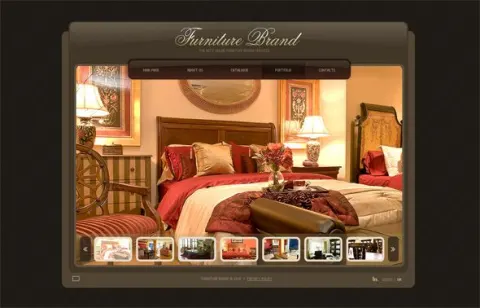
Setting up a website on a free template
A template (or "темплейт" in Russian) is a C++ language feature required for encoding generic algorithms without tying them to specific parameters. Based on a specific template, you can create the website you desire. You can choose a particular template, and after working on it, you become the owner of a website with a predefined design.
You can find free website templates online or obtain them for a nominal fee, meaning you pay money for the right to use them.
Installing your website on a free template can significantly save money, which is especially important for a beginner project, for example.
You can, of course, install your site on a selected template by yourself. However, when turning to the specialists at PurpleLabs, you will receive a high-quality website installed on a pre-defined template.
Using a free template is an excellent solution for those with limited time and a small budget for website creation. In a short period and for a small fee, you will achieve a quality result.
We begin Setting up a website on a free template with a short discovery session. We clarify the business goal, the audience, the expected result and the restrictions that can affect the solution. The existing website, content and technical environment are reviewed before work starts. This turns a broad request into a transparent list of tasks and prevents time being spent on features that do not help the customer or the business.
The work is divided into clear stages: research, preparation of the structure, implementation, testing and launch. For every stage we agree on an outcome that can be checked, and the customer can follow progress without having to understand development terminology. Important decisions are documented, so changes remain manageable and the final result corresponds to the approved scope.
Particular attention is paid to everyday use. The solution must work correctly on current desktop and mobile devices, load quickly and remain understandable to a first-time visitor. We check typical user scenarios, forms, links and error states, as well as the less obvious cases that often appear only after launch. Accessibility and clear presentation are considered from the beginning rather than added at the end.
Quality control is part of the process. Before publication we verify the result in several browsers, check performance and basic search-engine requirements, protect input points and create a backup. Where third-party systems are involved, we also test data exchange and failure scenarios. The customer receives a stable working service instead of a demonstration that still needs to be completed independently.
After launch, we explain how to use and update the result, provide the necessary access details and record the configuration. The project can be supported further: we monitor its operation, correct issues, update components and add functions when the business grows. This continuity is especially useful when a service is connected to a website, CRM, catalogue or another part of the company's infrastructure.